

Featured Articles
Servo Press Technology (Part 1): Operating Principles & Key Advantages
The servo mechanical press is the new era of stamping press technology. By combining the production of a conventional mechanical press and the formability of a hydraulic press, the servo press transforms what is possible in the stamping world today.
According to Grand View Research’s market report, the global metal stamping market size was valued at USD 257.3 billion in 2025 and is projected to grow from USD 266.3 billion in 2026 to USD 373.9 billion by 2033, at a CAGR of 5.0% from 2026 to 2033. As the stamping industry maintains upward momentum, the servo press is a popular option for many manufacturers looking for their unique edge in the marketplace. Due to its advantages, many stamping press experts believe the servo press will become the most popular stamping machine in the next decade.
Disclaimer: This article discusses only the servo mechanical press, not the servo hydraulic press.
What is a servo press?
A servo press is a metal stamping press that creates power from a servo motor rather than a flywheel or hydraulics. While conventional mechanical and hydraulic presses use a flywheel or pumps and cylinders respectively, a servo press creates energy via its servo motor thanks to the direct-drive design.
The differentiating factor of the servo motor is its ability to provide extreme control of the slide without sacrificing power. As a result, a servo press has precise control over all aspects of the stroke, such as stroke length, profile, position, speed, and dwell – within 1/1000th of an inch (0.0025cm). Additionally, the motor provides maximum torque at any position.
These two abilities combine to make the servo press the most versatile press today. Its precise yet powerful control of the ram makes it like no other press available. Manufacturers can now tailor-make stroke profiles for each die to ensure premium quality for every part created.
The difference between a 600-ton servo and a 600-ton mechanical
The natural question for many is, “How is a 600-ton servo press different from a 600-ton mechanical press?”
The difference lies in how the tonnage is delivered.
Both presses have 600 tons, but the mechanical press is rigid. It only delivers its tonnage in its standard crank or link motion. Other than speed, the stroke will be the same on every hit.
The servo press differs in that it can deliver its tonnage in hundreds of ways depending on the tooling design and material type. For example, you can switch from crank motion to link motion with a touch of a button. The press can dwell at BDC for as long as needed. Or it can vibrate during the stroke for those challenging parts. Contrary to mechanical presses, the servo press can change any aspect of the stroke to optimize production.
You can continue reading about the difference between a servo and a mechanical press HERE.
How does a servo press work?
The servo press uses modern technology to control the machine's motion. Its main components are a servo motor, pinion gear, main gear, crankshaft, connecting arms, and slide.
Direct-Drive Servo Motor
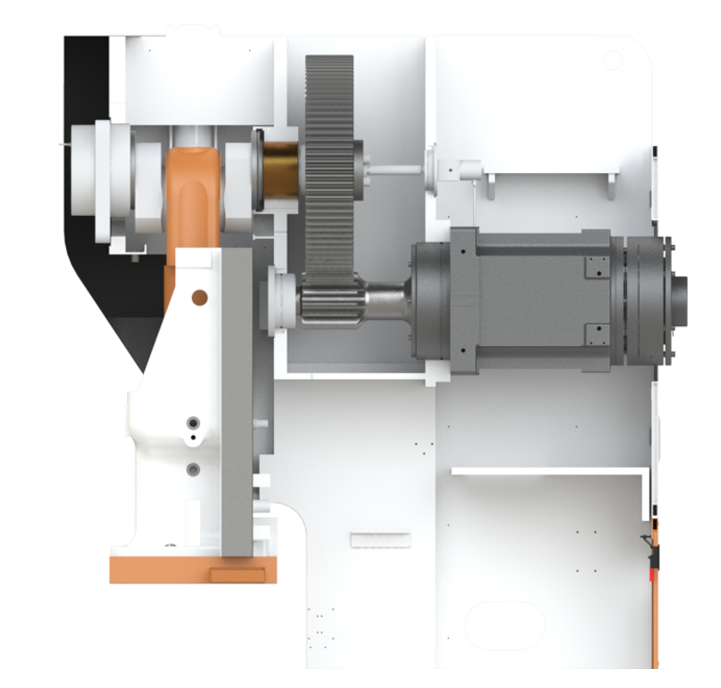 The heart of a servo press is the servo motor. Different from commercial servo motors, SEYI’s in-house developed ones are specifically designed for stamping press applications. It offers precise control of slide movement as well as forming speed. Commercially available high-speed motors require speed reducers. This leads to complicated designs and high energy losses. In contrast, SEYI adopts a direct-drive design for its servo presses without flywheels and a complex speed reduction mechanism. The servo motor integrates the pinion shaft directly into the motor. Thus, better accuracy and energy efficiency can be achieved. Meanwhile, this direct-drive motor type can increase speed and stroke optimization with much less vibration throughout the process, enhancing end product quality and productivity.
The servo motor with its low speed, high-torque characteristics are applicable to form high-strength steel, aluminum and other difficult-to-form materials. By using an optimized motion control, servo presses can eliminate spring-backs or cracks with a much lower tool wear rate.
Besides, SEYI’s servo presses adopt fan cooling system to maintain the servo motor performance. Customers can save a large amount of money on additional water-cooling system as well as power bills.
Servo Motor to Slide
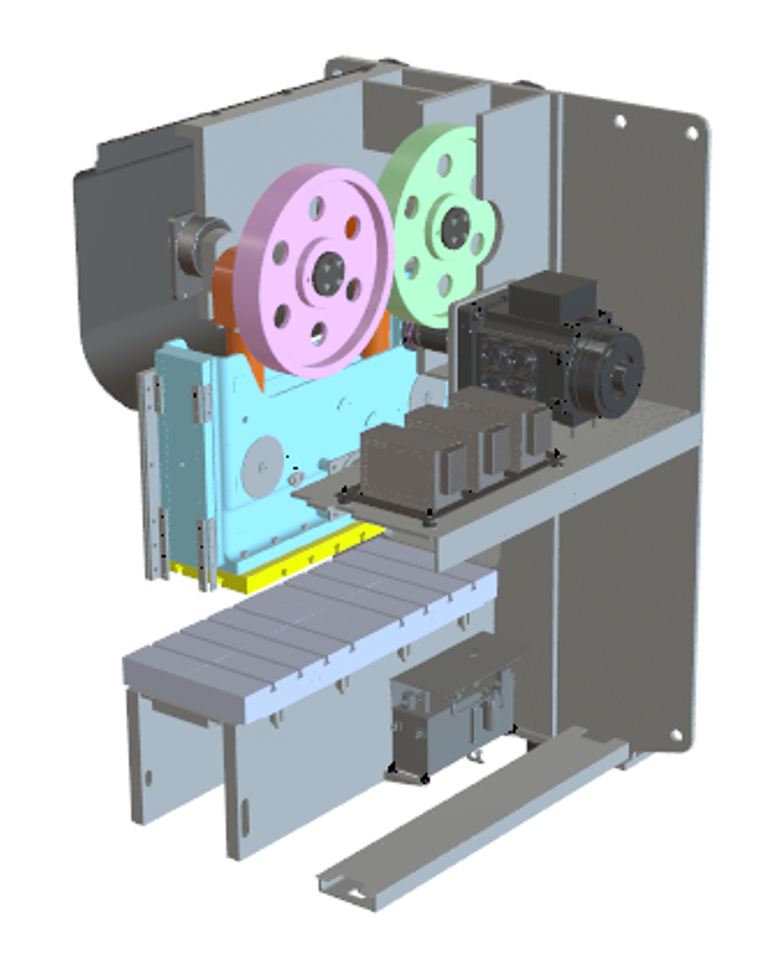 Using the process above, the servo motor begins creating power and spinning the pinion gear. The pinion gear attaches to the motor internally and is the first piece to move after the motor creates power.
After the pinion gear, the next component is the main gear, a large gear that multiplies the motor's torque. SEYI uses a custom-built, direct-drive servo motor, meaning the pinion gear connects directly to the main gear. Explicitly engineered for a servo press, these motors are high-torque, low-RPM engines. Consequently, there are minimal connections as a gearbox is unnecessary to create power.
Many servo press manufacturers use off-the-shelf servo motors. Most of these motors are high-speed, low-torque motors and are not specifically made for servo presses. As a workaround, engineers use a gearbox to increase tonnage. This creates more connection points between the pinion and main gear, thus more possible complications in the press's life.
Most consider direct-drive servo motors superior as they are tailormade for their presses. However, whether your servo motor is direct drive or not, the pinion gear connects to the main gear – either directly or via a gearbox.
From the main gear, the next connection is to the crankshaft. The crankshaft is a rotating component that runs in a 360-degree motion, or a swinging motion called "pendulum mode." Much of the machine's abilities, such as the stroke profile and speed, are made possible by the crankshaft.
The crankshaft's rotational motion converts into vertical movement when it connects to the connecting arms. The connecting arms follow the crankshaft and put its motion into effect. The final connection is from the connecting arms to the slide. Once attached, the servo motor can control the slide's position and stroke.
The Slide
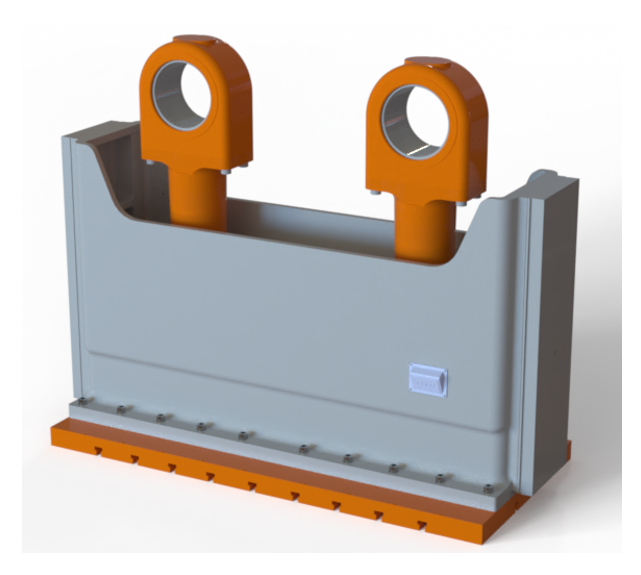 The slide (also called the ram) is the component that moves down and up, joining a die to the press. The slide actualizes the servo's controls. Suppose the press operator programs the stroke to move 3 inches (approx. 7.6cm) at 30SPM (strokes per minute). The slide is the part that physically moves the programmed amount.
A die is a component that presses against the loaded material and forms it into the desired part. Each die is engineered for the specific piece it makes. They can be loaded on and taken off the slide, a routine task for many contract stampers.
Overall, the connections go as so: servo motor > pinion gear > main gear > crankshaft > connecting arms > slide.
Structures of Servo Presses
Straight-Side Servo Press
Straight-side servo presses have four columns on each corner enclosing the sides of the work area, which allows for high tonnage without compromising the integrity of the press’ frame. This press type can be built using a multi-piece tie-rod construction or a single piece. Normally, the tie-rod design is for very high tonnages, massive bed sizes, and heavy progressive or transfer dies. The design also makes it easier to disassemble large presses for transport. It is best for large operations requiring high tonnage and sizable die. These are commonly used in car and appliance manufacturing. While they can be hand-operated, most straight-side presses use a feeding system.
SEYI offers straight-side large-tonnage servo presses starting at 400 tons up to 2,400 tons. View SEYI’s SDG and SDE Series of straight-side servo presses.
Solid Frame Servo Press
Solid frame, also known as a unitized frame, is a specific one-piece construction design of that straight-side frame forming an H-shape. The press is built as a single solid casting or welded structure, including the crown, columns, and bed, rather than held together by separate tie rods. This structure is suitable for lower-to-medium tonnage ranges where the higher rigidity is needed during rapid, repetitive stamping runs.
SEYI’s solid frame servo presses ranging from 80 to 500-tons. Find out more about SD Series.
C-Frame Servo Press
C-frame presses get their name from their side being in the shape of a "C." These presses are also referred to as gap frames.
Gap frames are versatile presses that are quick, rigid, and precise. Gap frames are usually integrated with automation systems, but they can be used for hand operations. They are common for stampers who need flexibility and require frequent die changes. These presses are great for small operations and limited floor space.
SEYI’s SDN1 Series is a C-frame servo press. Being released in 2023, the SDN1 Series is the most technologically advanced C-frame servo press available today.
Heavy Stamping Servo Presses
A heavy stamping press is the best option when it comes to consolidating tonnage. This type of press centralizes its tonnage by having a small bed area. To compare, SEYI’s SDG2-800 type 2 (a straight-side servo) has a bed size of 3100cm × 1550cm, whereas SEYI’s SDM1-800 (heavy stamping servo) has a bed size of 1500cm x 1500cm, i.e., half the surface area.
A heavy stamping servo excels in stamping thick metals, AHSS, and other high-strength materials. These presses are the best option for challenging processes such as heavy blanking or forming.
SEYI’s SDM1 Series is a heavy stamping servo press ranging from 500, 650 to 800 tons. With the ability to form AHSS and thick steel plates, the SDM1 allows manufacturers to participate in niche opportunities other stamping presses cannot compete in.
Unique Capabilities of a Servo Press
Why invest in a servo press over a conventional press?
The answer is flexibility. A servo press’ capabilities make it the most workable press in metal stamping. Below are a few servo press abilities you should be aware of.
Programmable Slide Motion
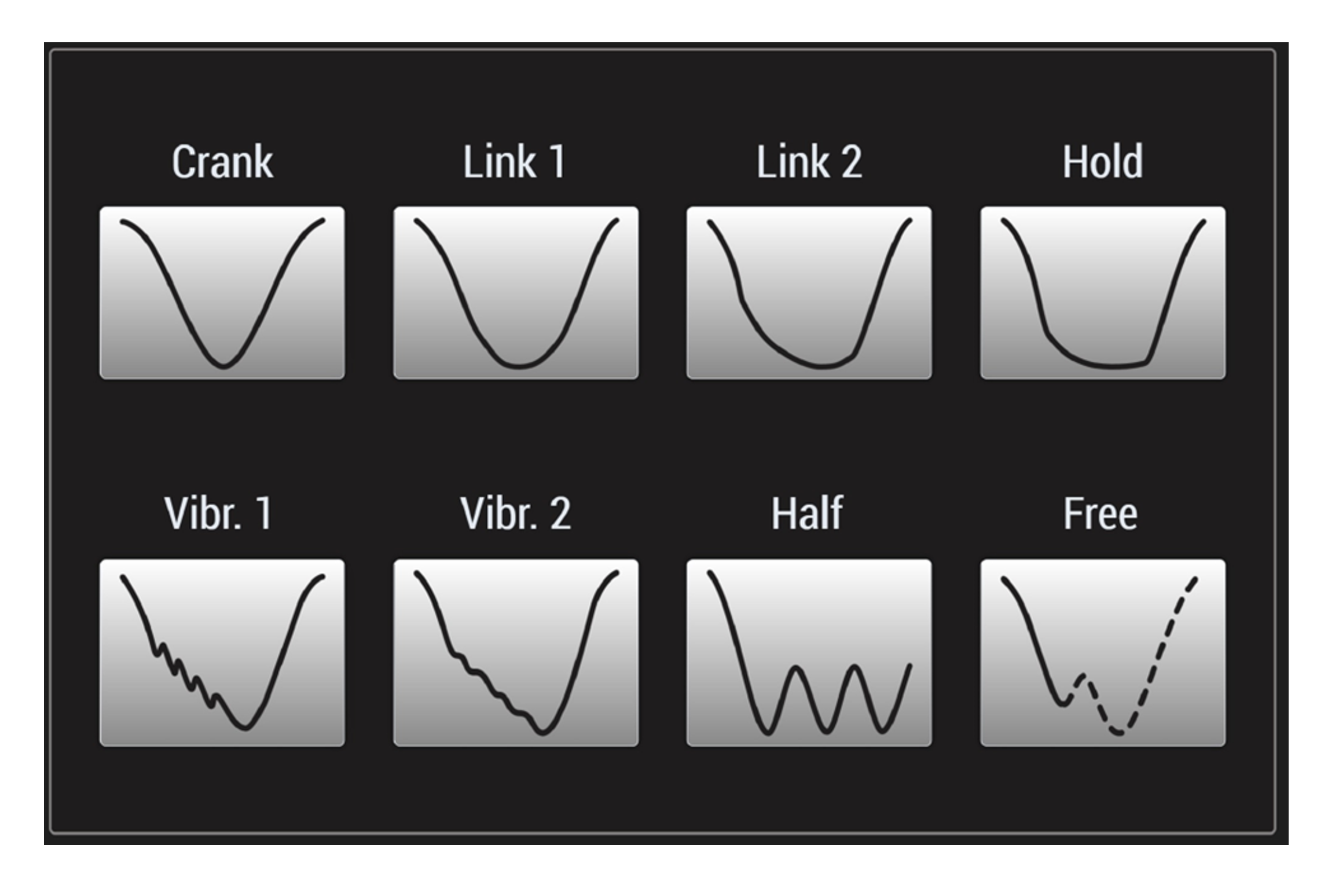
Programmable slide motion is the ability of a servo press to control speed, position, direction, and dwell at any point during the press' stroke. This ability allows you to optimize both the working and non-working portions of the stroke, leading to higher quality and improved output.
Any part created on a servo press can be optimized with programmable slide profiles. Considering some parts need a longer dwell while others require a slower forming speed, this ability to customize the stroke is a considerable advantage for you.
For example, let's say you have a part that requires a two-inch stroke and a press with a five-inch stroke. You can program the slide to travel only the two inches needed to create a part. As a result, you cut the upper three inches out of the stroke, increasing output. Additionally, you can slow the speed of the stroke precisely when the die hits the material if a part needs a slower forming speed.
Watch the various stroke profiles of a servo press HERE.
Vibration
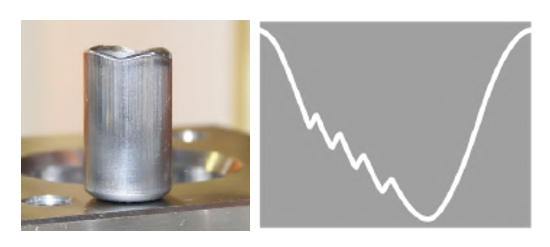
A servo press optimizes deep drawing via vibration. Vibration is the ability of a slide to reverse up a programmed amount before completing the down-portion of the stroke. This motion makes fewer strokes necessary, as one stroke can create a part. This also means the tooling cost can be saved by consolidating multiple stations into fewer stages.
In conventional presses with deep drawing die setups, manufacturers often strike a metal multiple times, forming it half an inch at a time. This process leads to several strokes, extra stations, and larger dies to complete each piece.
You can significantly increase output and speed if stroke length is shortened. The issue with conventional mechanical presses is that its stroke length cannot decrease due to the flywheel. By replacing the flywheel with the servo motor, the crankshaft does not have to complete a 360-degree rotation. Instead, arms swing back and forth at predefined angles on the crankshaft, referred to as pendulum mode, the most common operational profile in servo presses.
A servo press eliminates these extra strokes. For example, you can program a stroke to go to a position above BDC and reverse up slightly before resuming downward again. This process can be done multiple times within a stroke before the slide arrives at BDC.
Deep draw work improves as the press can complete complicated parts in one stroke. Components such as oil filters and deep cans that require ten-plus strokes on a conventional press are streamlined on a servo mechanical press.
Watch a vibration stroke profile HERE. This part might take a mechanical press several strokes to complete.
Pendulum Mode
The ability to swing a pre-defined angles around the crankshaft rather than complete an entire stroke degrees improves output in most scenarios. Often, manufacturers define these angles at 270 degrees and 90 degrees, cutting the crank movement by 50%.
Company A is an American manufacturer specializing in fabricated metal and hardware. After installing a SEYI SD2-220, the company saw a 50% increase in production as they increased their SPM (strokes per minute) from the mid-thirties to the lower-fifties. Their switch from a mechanical press to a SEYI servo press allows them to create 50% more parts.
Watch pendulum motion on a 1000-ton servo press HERE.
Energy Management System: Power Leveling & Power Regeneration
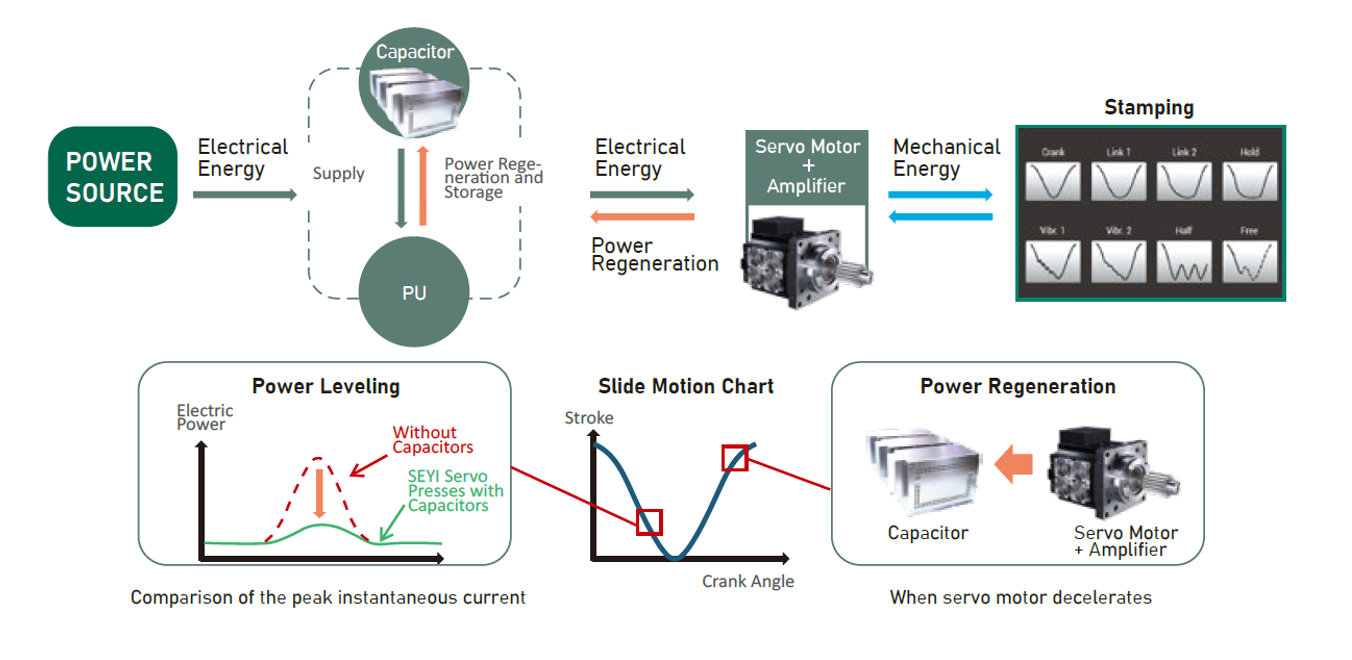
Stamping operations require a large amount of energy in a very short period of time. To minimize the impact on the power grid, a power leveling system is required to smooth out power demand. The factory power supply provides energy to the Power Unit, which in turn supplies power to both the capacitors and the driver. The capacitors deliver the high instantaneous energy required for stamping, while storing energy during the rest of the operating cycle.
Through a power leveling design, fluctuations in power demand during stamping operations, as well as during the acceleration and deceleration period of the servo motor, are effectively smoothed out. This prevents sudden increases in the factory's power demand. The instantaneous current generated during stamping can be regulated through a voltage stabilizer, allowing the primary-side current of the factory power supply to remain stable.
At the same time, the motor is equipped with power regeneration capability. In addition to consuming electrical energy to accelerate the motor, the motor also generates electricity during deceleration. Traditionally, this regenerative energy was dissipated through braking resistors, resulting in unnecessary energy waste. By storing the recovered energy in capacitors, the system enables energy recovery and reuse, improving overall energy efficiency.
Powerful Servo Control System
The core of a servo press control system lies in transforming the fixed mechanical motion of a traditional press into digitally programmable motion of a servo press. It is responsible for converting the power of the servo motor into flexible, precise, and repeatable production movements.
The servo control system acts similarly to a car's cruise control. The system provides the desired speed to the engine. Electronics then monitor this speed, increasing or decreasing the engine's power to remain at the programmed speed.
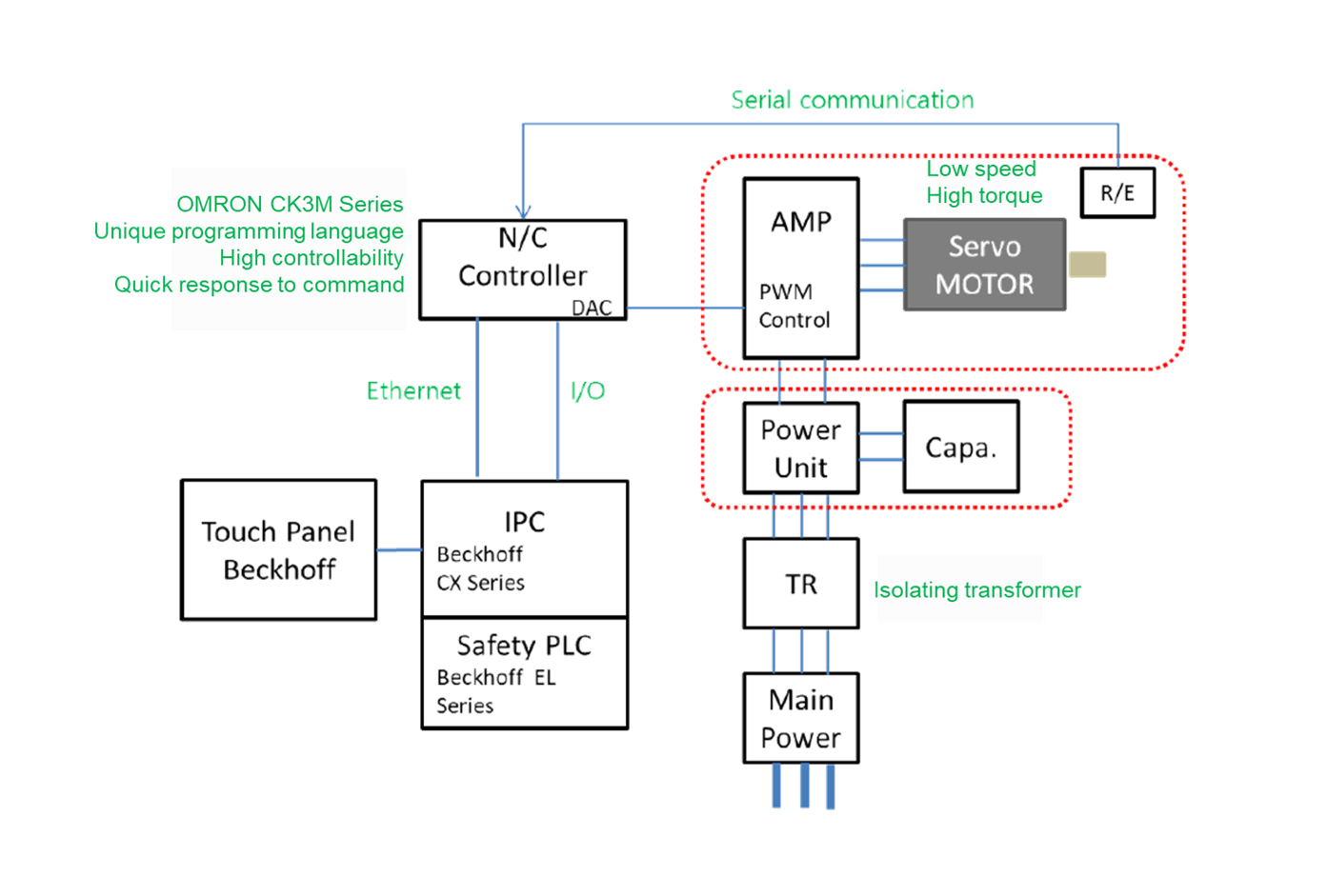
Similarly, once the user sets the stroke profile, the motion controller calculates control commands to make the servo driver output appropriate power to the servo motor. The encoder constantly feeds back information, such as the position and velocity of the servo motor, to the motion controller for real-time motion control and correction of the stroke profile.
Unlike conventional mechanical presses whose available energy depends on flywheel speed, servo presses can deliver constant energy across the entire speed range. For example, traditional presses lose tonnage when running at low speeds while servo presses deliver 100% full capacity and maximum energy even at a crawl. This enables stable forming performance at both high and low operating speeds, ensuring consistent force output, improved process control, and superior product quality.
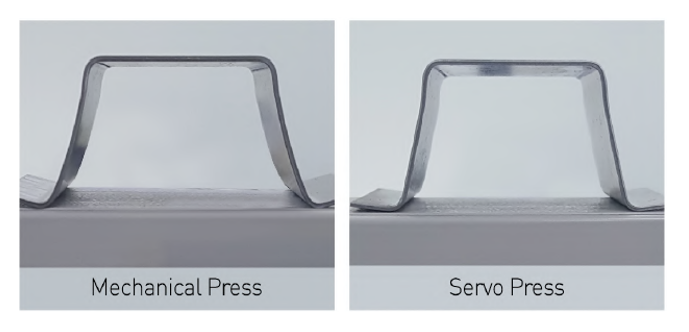 Another unique capability of a servo press is its ability to dwell at the bottom dead center (B.D.C.), maintaining precise pressure for a programmable period. This dwell function allows the material to fully conform to the die shape and relieves internal stress before release.
As mentioned earlier, the ability to dwell at any position in the stroke allows in-die operations to occur. In-die operations are secondary manufacturing techniques that occur during a stroke.
This article introduces what a servo press is and how it works. Its structure types and unique capabilities are also elaborated. In the next article, we will continue to introduce the differences of the slide motions a servo press can offer and the most frequently used applications on the press.
SEYI employs a world-class motion controller with a command update rate of up to 50 μs, significantly enhancing control speed and accuracy. In addition, a 18-bit resolution encoder is utilized to further improve positioning precision.
By integrating a high-resolution encoder with a high-speed controller, the servo press achieves superior motion control performance and precision. This enables more accurate operation across a wide range of stamping profiles, ensuring greater consistency and precision in various stamping applications.
Constant Energy at Any Speed
As a result, stampers gain greater flexibility for complex forming applications while maintaining high precision and production efficiency.
Springback Control
Another unique capability of a servo press is its ability to dwell at the bottom dead center (B.D.C.), maintaining precise pressure for a programmable period. This dwell function allows the material to fully conform to the die shape and relieves internal stress before release.
Springback effect can be reduced or eliminated by hitting the material multiple times at B.D.C. As a result, springback in high-strength steels can be significantly reduced, improving dimensional accuracy, part consistency, and overall forming quality while minimizing the need for secondary correction processes.
In-Die Secondary Operations
Some in-die operations include welding, tapping, nut insertion fastening, or assembly right inside the stamping die. These techniques save time later in the production cycle and allow for more sophisticated parts to be created. Weston Coleman from T&C Stamping Inc., who purchased a SEYI servo press, states, "We have a bracket part that requires insertion of two studs. We are able to accomplish this operation in the servo press without the need for a manual secondary operation."